

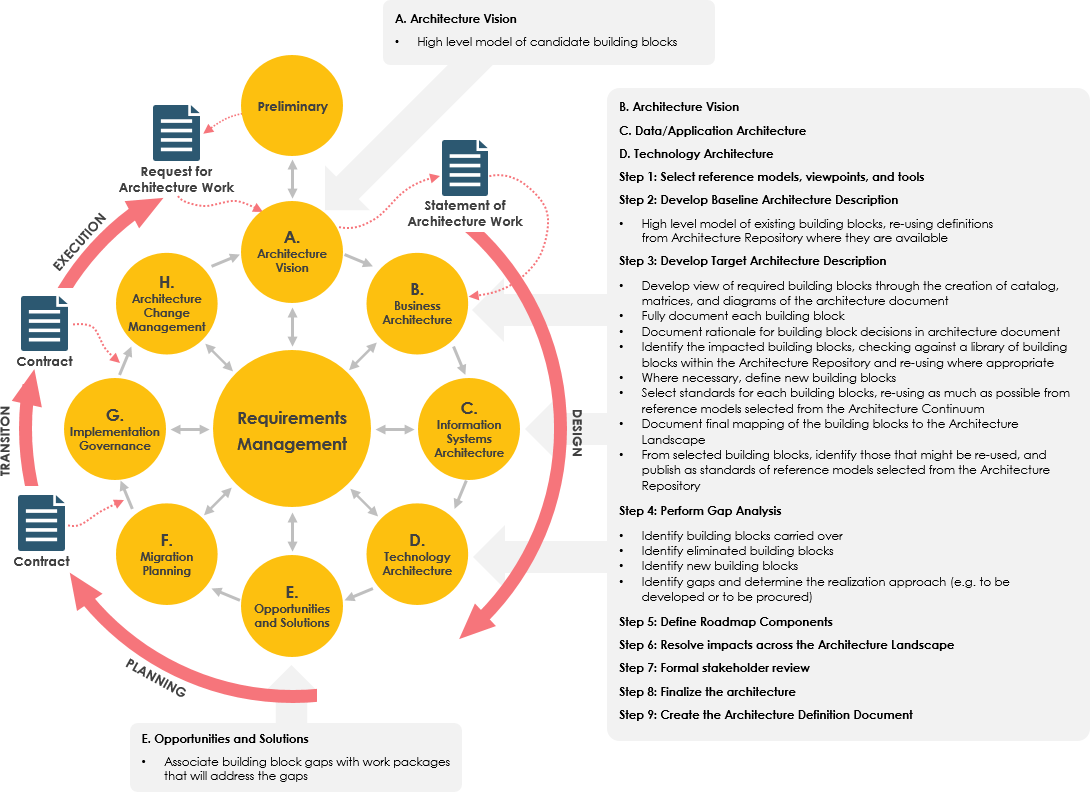
In the complex landscape of modern enterprise systems, clarity is currency. Enterprise Architecture (EA) provides the strategic blueprint for aligning business goals with IT capabilities, and the ArchiMate standard has emerged as the global language for this discipline. However, knowing the theory is only half the battle; understanding the rigorous process of the Architecture Development Method (ADM) is where true value is created.
This tutorial explores the heart of the ADM process—visualized in the image above—as a cyclical journey from high-level vision to detailed migration planning. We will break down how EA teams navigate the phases of Business, Information Systems, and Technology architecture, ensuring that every digital transformation is grounded in solid architectural foundations.
The Core: Requirements Management and Architecture Vision
Every successful architecture project begins not with drawing diagrams, but with defining the problem. At the center of the ADM cycle lies Requirements Management. This is not a one-time activity but a continuous feedback loop that ensures the architecture remains relevant throughout the development lifecycle.
1. Preliminary Phase & Architecture Vision
Before diving into the specific domains, the team must establish the Architecture Vision (Phase A). This is the “North Star” of the project. It defines the scope, stakeholders, and constraints. It answers the critical question: “What are we building and why?”
- Architecture Vision: This involves creating a high-level model of the candidate building blocks. It is the initial proposal that guides the entire effort.
- Request for Architecture Work: A formal document that initiates the project, often linked to a contract or business need.
Exploring the Architectural Domains
Once the vision is set, the ADM moves into the core design phases. The image displays three distinct but interconnected layers of architecture that must be developed in parallel or in a specific sequence depending on the project needs.
2. Business Architecture (Phase B)
The foundation of any IT system is the business process it supports. Business Architecture focuses on the business strategy, governance, organization, and key business processes. In ArchiMate, this layer deals with:
- Business Actors: Who performs the actions?
- Business Processes: What are the steps to achieve the goal?
- Business Services: What value is delivered to the customer?
3. Information Systems Architecture (Phases C & D)
Once the business requirements are clear, we design the systems that will support them. This is split into two phases:
- Data/Application Architecture (Phase C): This defines the logical structure of the information and the applications that process it. It focuses on data entities, application functions, and the interfaces between them.
- Technology Architecture (Phase D): This describes the physical infrastructure required to support the applications. It includes hardware, networks, and deployment targets.
The Execution Cycle: From Design to Planning
The ADM is not a straight line; it is a continuous loop of refinement. The outer ring of the diagram illustrates the flow from Design to Planning and finally Transition.
4. Gap Analysis and Roadmapping (Phase E)
After defining the target architecture, the team must compare it with the current state. This is the Gap Analysis. The goal is to identify:
- Building blocks carried over: What existing assets can be reused?
- Building blocks eliminated: What is being deprecated?
- New building blocks: What needs to be procured or developed?
Based on these gaps, the team defines Opportunities and Solutions. This phase results in a Migration Plan (Phase F), which details the sequence of projects required to move from the baseline to the target state.
5. Implementation Governance and Transition
The final stages involve ensuring that the actual implementation aligns with the architectural plan. Implementation Governance (Phase G) monitors the projects to ensure compliance. Once the solution is deployed, the cycle feeds back into Requirements Management to handle Architecture Change Management (Phase H), ensuring the architecture evolves with the business.
Key Steps in Architecture Development
To successfully navigate these phases, EA teams typically follow a structured set of steps, often referred to as the “Architecture Continuum.”
- Step 1: Select Reference Models: Choose the right viewpoints and tools to document the architecture.
- Step 2: Develop Baseline Architecture: Document the current state using definitions from the Architecture Repository.
- Step 3: Develop Target Architecture: Create the view of required building blocks, documenting rationale and selecting standards.
- Step 4: Perform Gap Analysis: Identify the differences between baseline and target.
- Step 5: Define Roadmap Components: Structure the migration work packages.
- Step 6: Resolve Impacts: Analyze how changes affect the broader landscape.
- Step 7: Formal Stakeholder Review: Validate the architecture with key decision-makers.
- Step 8: Finalize the Architecture: Publish the Architecture Definition Document.
Conclusion
By following the structured approach of the Architecture Development Method, enterprise architects can ensure that their designs are not just theoretical exercises but practical blueprints for success. Whether you are designing a new business process or migrating legacy systems to the cloud, the ADM provides the necessary rigor to manage complexity and drive value.