

C4 Dynamic Diagrams: Communication View, Sequence View, and Tooling
A C4 dynamic diagram is a supplementary view that shows how elements from a C4 static model collaborate at runtime to carry out one scenario—a feature, use case, or user story. It is based on the UML communication diagram, formerly …
C4 Supplementary Sequence Diagrams: A Practical Guide
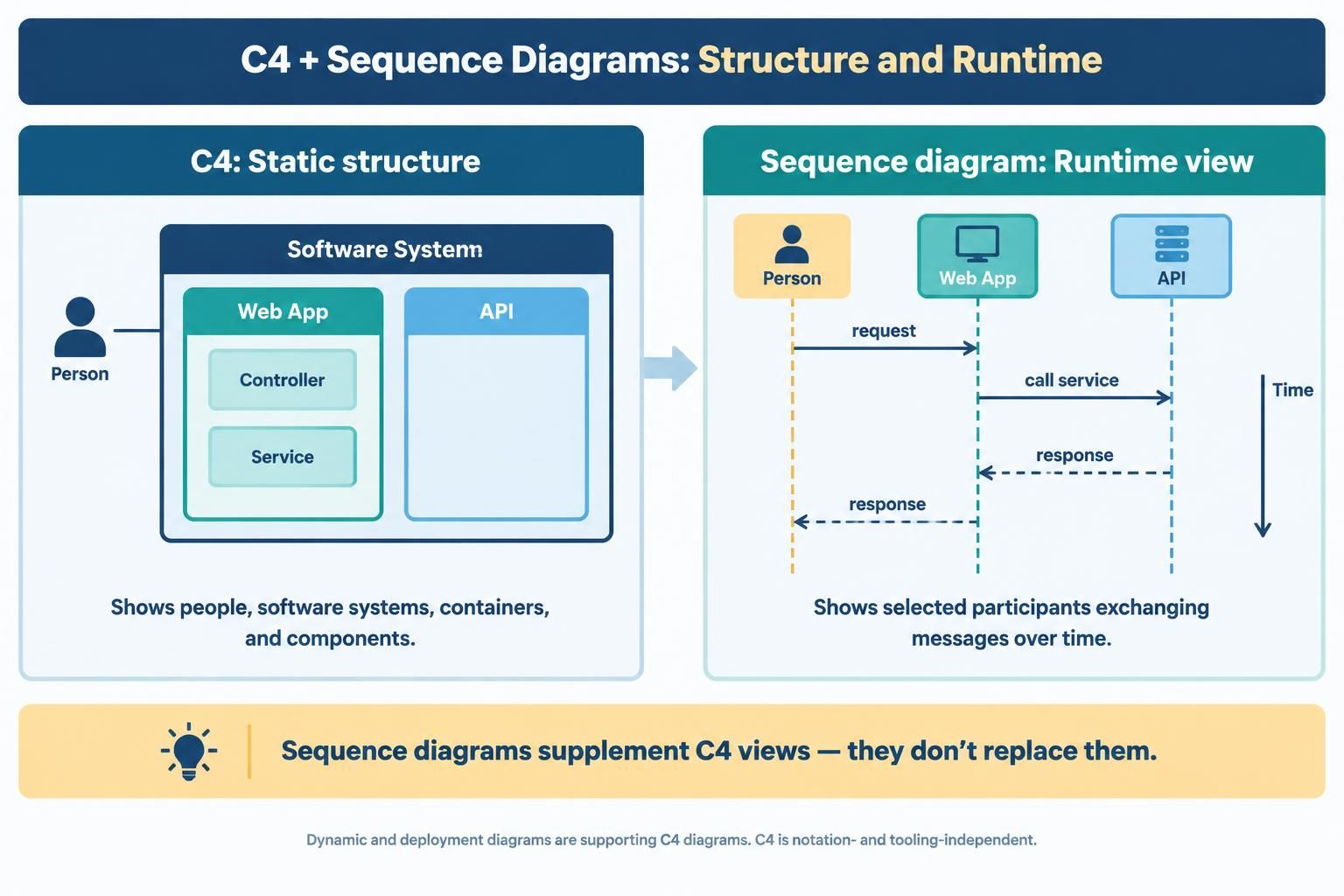
C4 diagrams explain a system’s static structure: its people, software systems, containers, and components. A sequence diagram adds a runtime view, showing how selected participants exchange messages over time. It supplements the C4 views; it does not replace them. The …
C4 Deployment Diagrams: A Practical Guide with C4-PlantUML and Visual Paradigm
Introduction
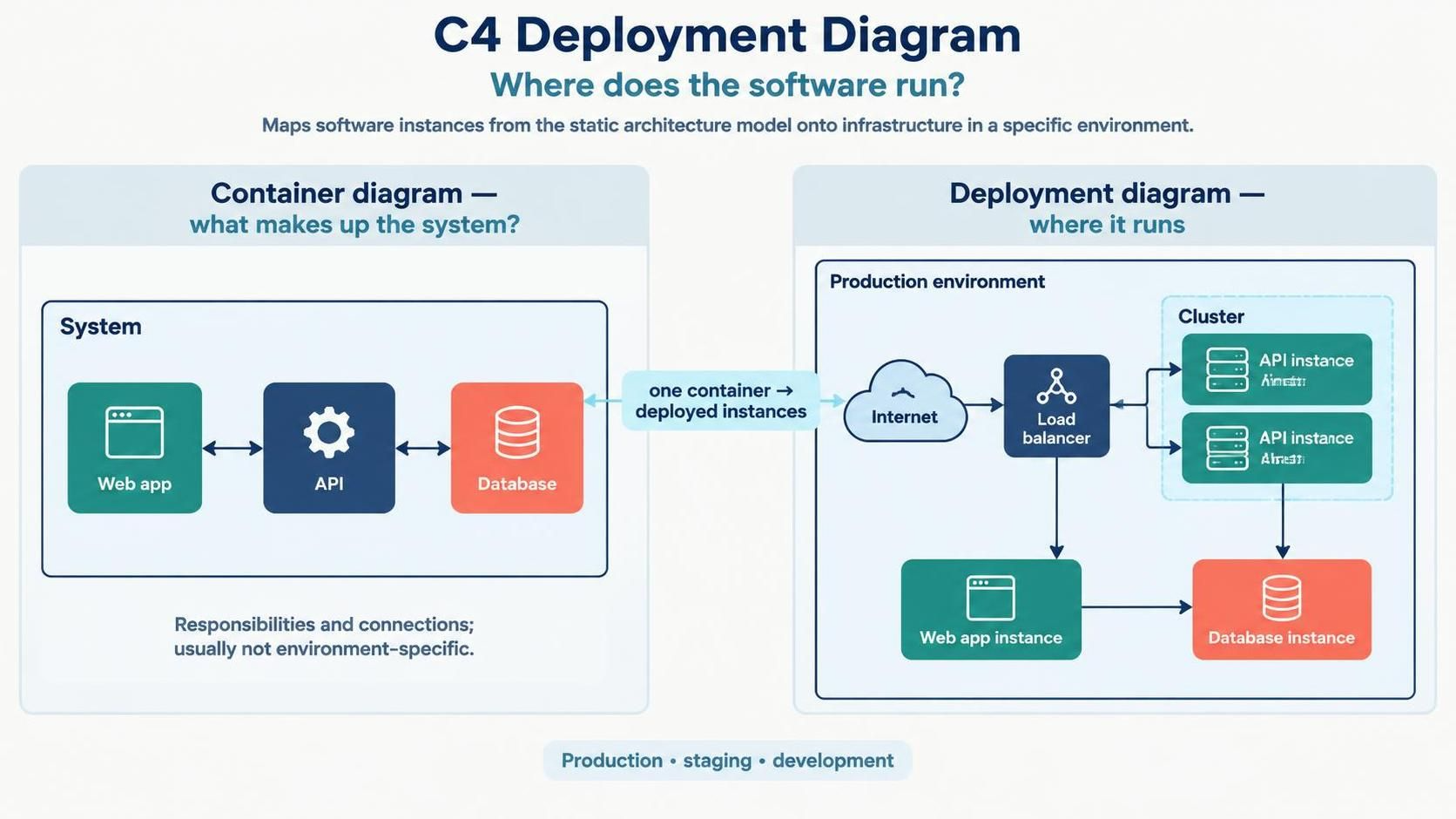
A C4 deployment diagram answers a question that the other C4 views leave open: where does the software run? It maps instances of software systems or containers from the static architecture model onto infrastructure within a particular deployment environment—such …
C4 System Landscape Diagrams: Concepts, Examples, and Tooling
Introduction
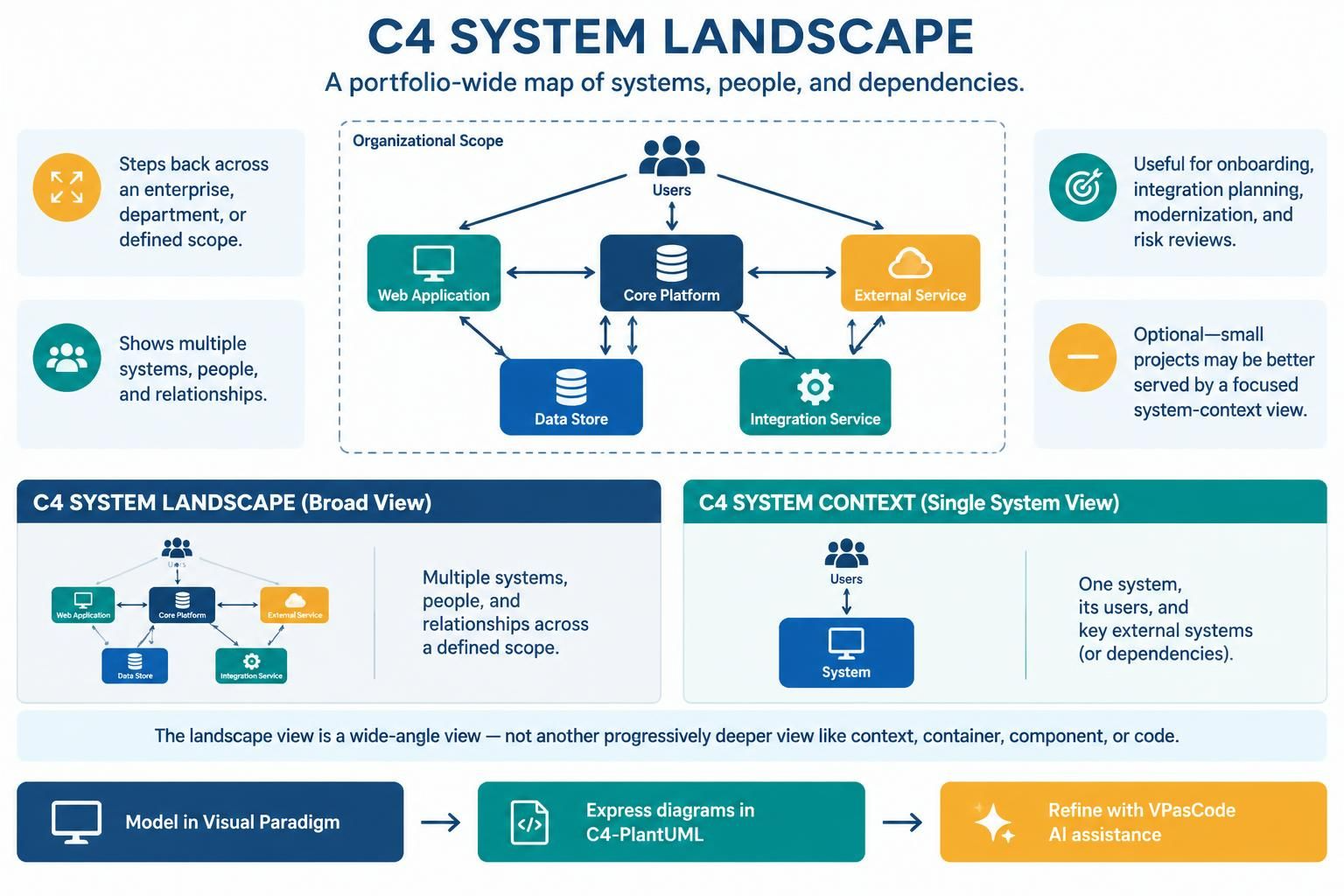
A C4 system landscape diagram gives readers a map of the software systems and people within a chosen organizational scope. While C4’s context, container, component, and code views progressively examine one software system, a landscape view steps back …
Flowchart Comprehensive Guide: From Core Concepts to AI-Assisted Diagram-as-Code with Visual Paradigm VPasCode
Introduction
Every process tells a story—but a story buried in prose is a story half-told. Whether you are mapping an algorithm, documenting an approval workflow, or tracing a CI/CD pipeline, a flowchart transforms abstract logic into a visual language that …
Comprehensive Guide to TOGAF ADM with Visual Paradigm: Concepts, Tooling, and AI Assistance
Introduction
Enterprise architecture has long suffered from a paradox: the frameworks designed to bring clarity and control to complex organizations are themselves notoriously difficult to adopt, learn, and sustain. TOGAF, and its Architecture Development Method (ADM), remains the most widely …
Visual Paradigm for TOGAF ADM: A Comprehensive Guide
Introduction
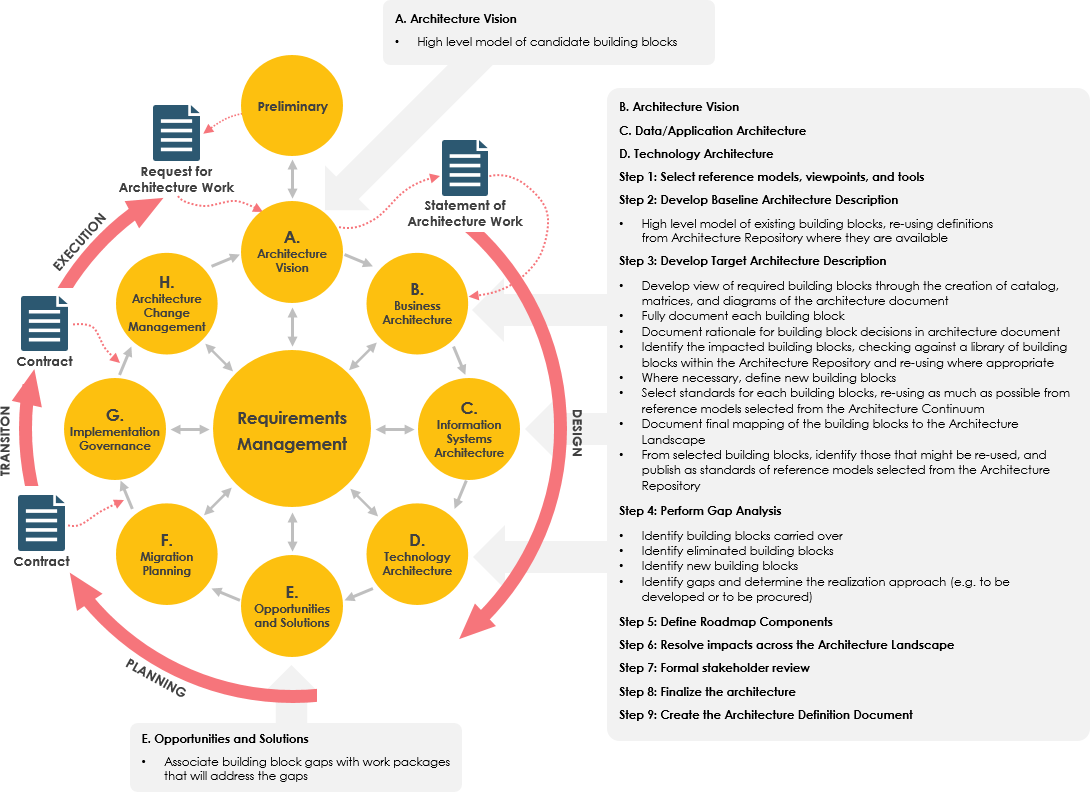
TOGAF’s Architecture Development Method (ADM) provides a rigorous, cyclical framework for developing enterprise architecture, but its complexity often creates a steep learning curve and heavy documentation burden. Visual Paradigm addresses this gap by embedding the ADM into a guided, …
Visual Paradigm ArchiMate + AI: A Comprehensive Guide
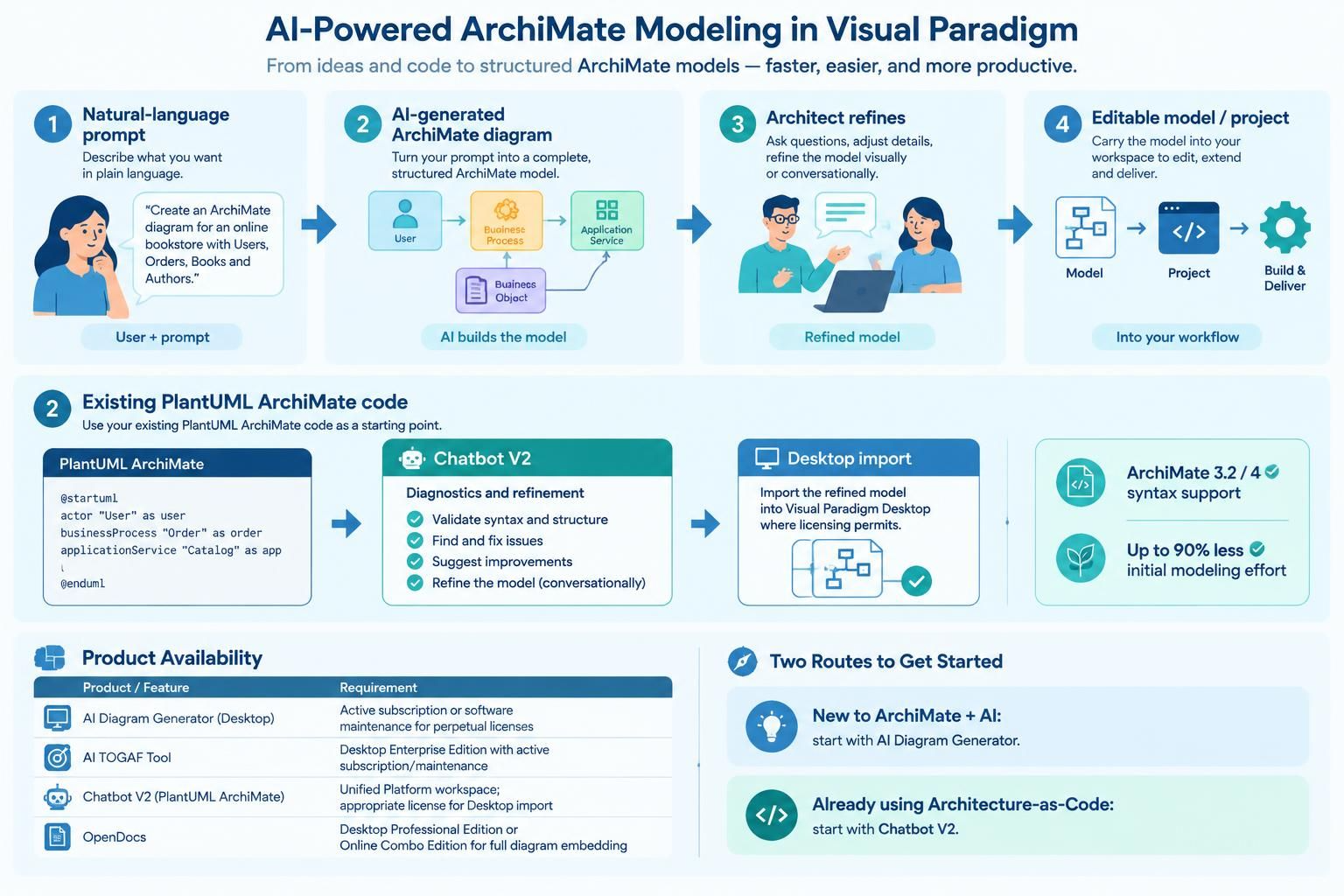
Bottom line up front: Visual Paradigm has integrated generative AI directly into its ArchiMate modeling ecosystem, enabling architects to generate standards-compliant diagrams from natural language prompts in seconds, refine them through conversational AI, and bridge the gap between PlantUML code …
Visual Paradigm Gantt Chart and AI-Assisted Features: A Comprehensive Guide
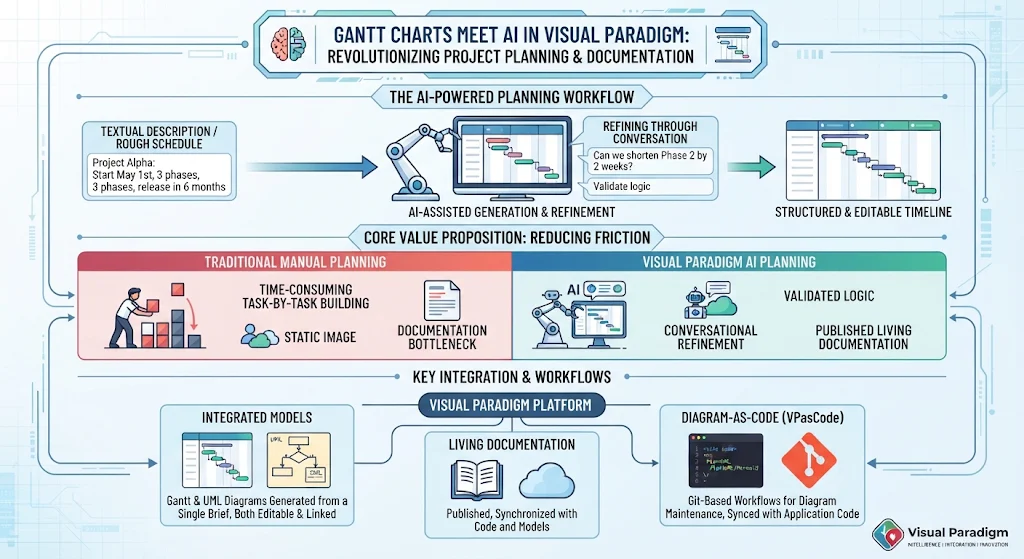
1. Introduction: Why Gantt Charts Meet AI in Visual Paradigm
Project planning in system development often begins as a textual description or a rough schedule. The challenge is transforming that abstract intent into a visual timeline that stakeholders can understand, …
Visual Paradigm PERT Chart and AI-Assisted Features: A Comprehensive Guide
Executive Summary
What this guide covers: The PERT (Program Evaluation and Review Technique) chart remains one of project management’s most rigorous scheduling tools, particularly for complex, non-routine projects where task durations carry uncertainty . Visual Paradigm transforms PERT from a …